A $50 gift card costs $50 almost everywhere. What differs is everything around the purchase: whether you can pay in cash, whether the card arrives now or next week, whether you collect points on it, and who helps you if the card does not work. Here are the places gift cards are sold, with what each is good for.
Directly from the brand
Every large retailer sells its own gift cards on its website, in its app and at its tills.
Good for: the widest choice of designs and amounts, digital delivery with a message and a scheduled date, and a single company to deal with if anything goes wrong. A card bought from the brand is as safe as a gift card gets.
Keep in mind: you need to know which brand you want, and you usually pay by card rather than cash unless you are in the shop.
Supermarkets, pharmacies and big-box stores
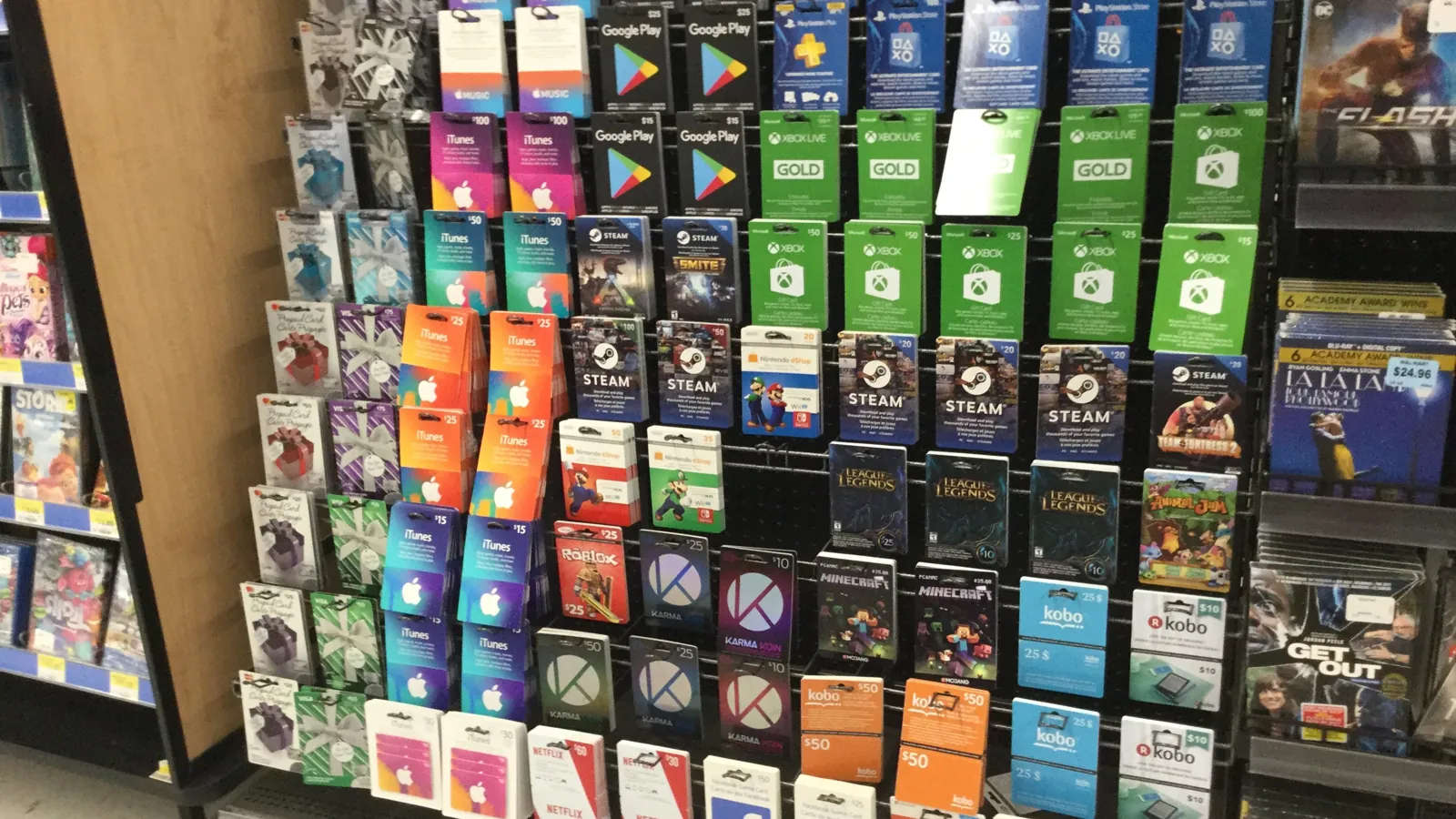
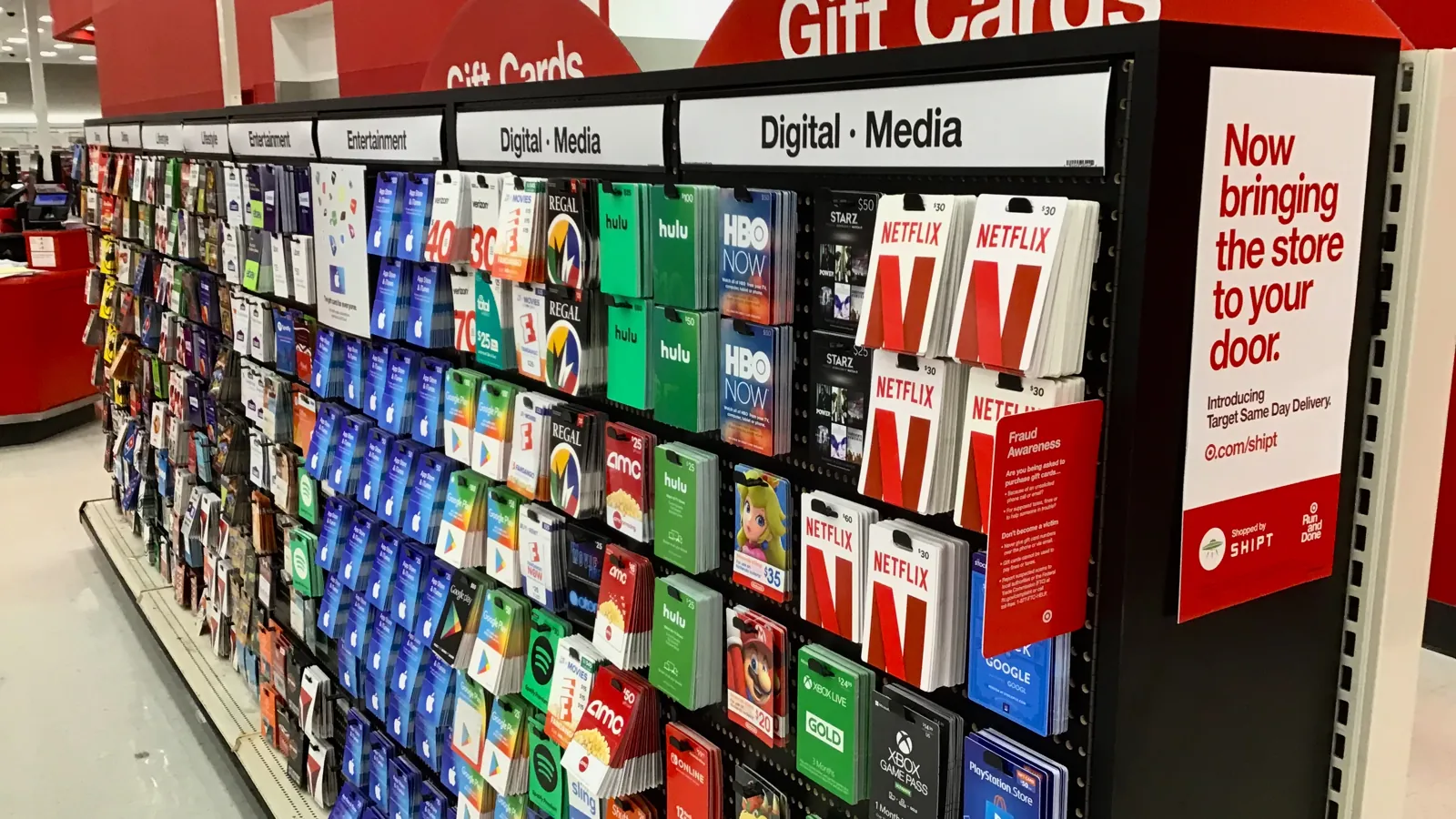
The gift card rack, sometimes called a gift card mall, is the most familiar place to buy. Supermarkets, pharmacies, convenience stores and big-box retailers sell cards for restaurants, clothing brands, streaming and gaming services, app stores and prepaid Visa and Mastercard cards.
Good for: buying on the way to a party, paying in cash, comparing brands side by side, and collecting supermarket loyalty or fuel points, which many chains award on gift card purchases.
Keep in mind: inspect the card. The packaging should be sealed and the strip over the PIN untouched. Take a card from the middle of the hook rather than the front. Our safety guide explains why.
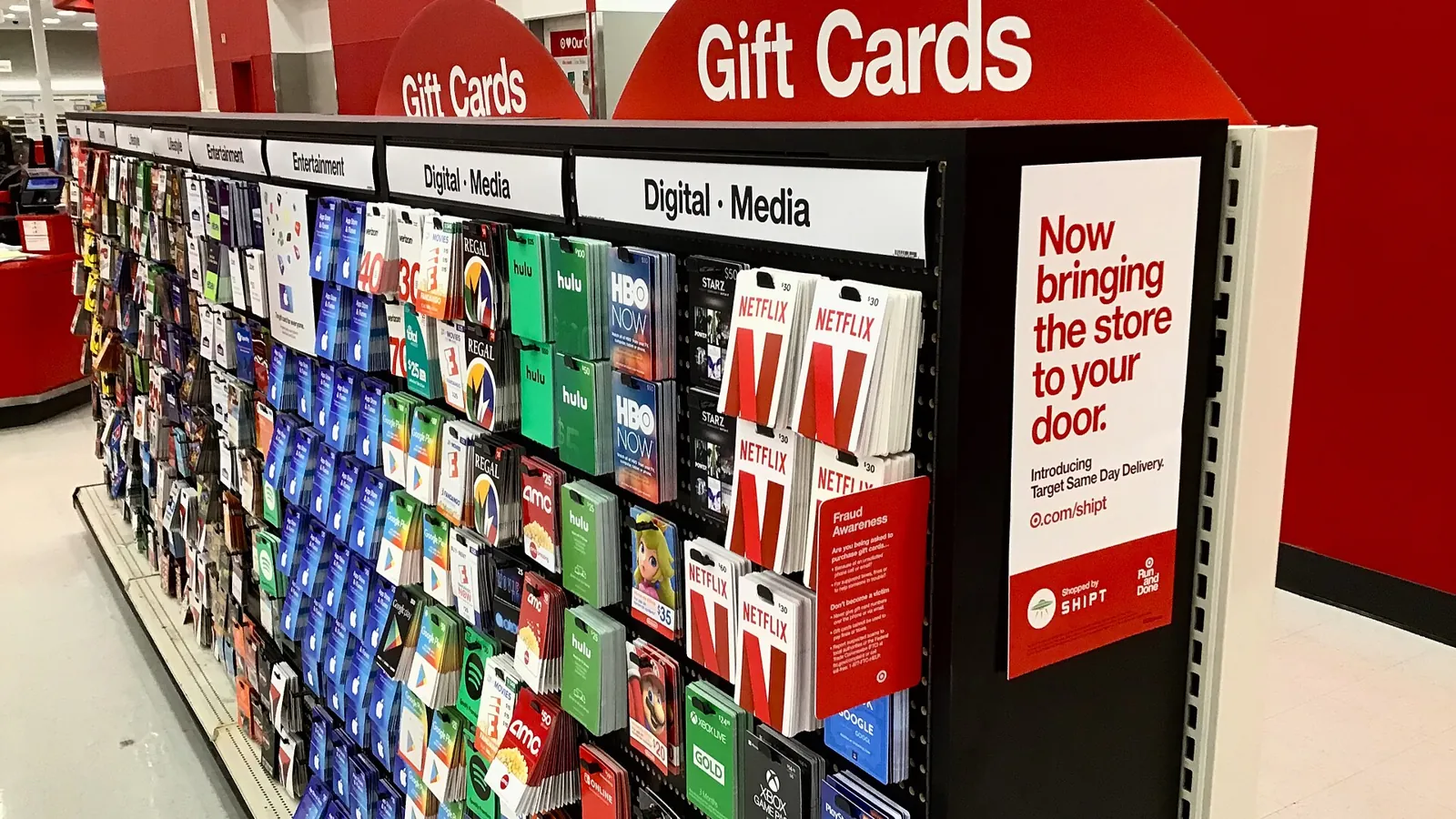
One rack can carry cards for restaurants, clothes, games and travel. Photo: Mike Mozart, CC BY 2.0, via Wikimedia Commons.
Warehouse clubs
Membership warehouse stores sell multi-packs of restaurant, cinema and entertainment cards below face value, for example a pack worth $100 for around $80. The saving is real and the cards are genuine.
Good for: restaurants and experiences you already use, and gifts for several people at once.
Keep in mind: the range is narrow, the packs are fixed, and you need a membership.
Online gift card stores
Specialist websites and the gift card sections of large online retailers sell digital cards for hundreds of brands, delivered by email. PayPal runs its own digital gift store, and several payment and shopping apps sell cards inside the app.
Good for: last-minute gifts, sending to someone in another city, and finding less common brands.
Keep in mind: buy from a well-known seller. Check that the site is an authorised seller for the brand, that the price is not improbably low, and that the card is for the right country.
Banks, card issuers and loyalty schemes
Many credit card reward schemes, airline programmes and bank apps let you exchange points for gift cards, and some offer a small percentage back when you buy a card through the app.
Good for: using up points that would otherwise sit idle.
Keep in mind: compare the value. A thousand points may be worth more as a statement credit than as a card.
Employers and benefit platforms
Workplace benefit schemes often sell gift cards at a few percent off as a staff perk. If you have access to one, it is a legitimate way to shave the cost of a card for a shop you already use.
Resale marketplaces
Websites where people sell unwanted gift cards offer the biggest discounts, sometimes 10 percent or more.
Good for: very little, unless the marketplace guarantees the balance for a meaningful period and you intend to spend the card at once.
Keep in mind: the seller knows the card number. A card can show the right balance when you buy it and be emptied a week later. Stolen or fraudulently obtained cards are also sold this way and can be cancelled by the brand. For a gift, buy new.
Too cheap is a warning. A new gift card sold far below its value by an unfamiliar site or a social media account is one of the commonest gift card frauds. Genuine discounts are small.
Which place for which need
You want to
Buy from
Send a gift today to someone far away
The brand's own site, digital delivery
Pay in cash
A supermarket, pharmacy or big-box store rack
Give several small gifts
A warehouse club multi-pack or a supermarket
Give something flexible
A prepaid Visa or Mastercard card from a rack or a bank
Use up reward points
Your card issuer's or airline's rewards site
Save a little on a shop you use every week
A staff benefit scheme or a warehouse club
Paying for a gift card
- Debit or credit card works everywhere and gives you a record. A few card issuers treat large gift card purchases as unusual and may ask you to confirm them.
- Cash works at any shop rack.
- Another gift card usually does not. Most retailers block buying gift cards with gift cards.
- Buy-now-pay-later and store credit are often excluded for gift card purchases.
Expect limits. Shops and websites cap how much can be loaded on one card and how many cards one person can buy in a day. The limits exist to slow down fraud, and staff may ask a question or two about a large purchase for the same reason.
Before you leave the till or close the tab
- Check that the receipt or order email shows the card as activated and the right amount.
- Keep that proof with the card, or forward it to the recipient.
- For a physical card, photograph the back.
- For a prepaid network card, note the website and phone number printed on it for checking the balance.
Next: an overview of the big brands and how their cards work.
Questions readers ask
Is it cheaper to buy a gift card online or in a shop?
The face value is the same. Any difference comes from points, cashback or a discount scheme, not from the channel.
Can I return a gift card I bought by mistake?
Usually not. Most sellers treat gift cards as non-refundable once activated. Some will help if the card is unused and you ask promptly, so it is worth contacting them.
Why did the cashier ask why I was buying so many cards?
Staff are trained to spot customers who have been told by a fraudster to buy gift cards. It is a protection, not an accusation.
Are gift cards sold on social media safe?
Treat them as unsafe. There is no way to check the balance will still be there after you pay.