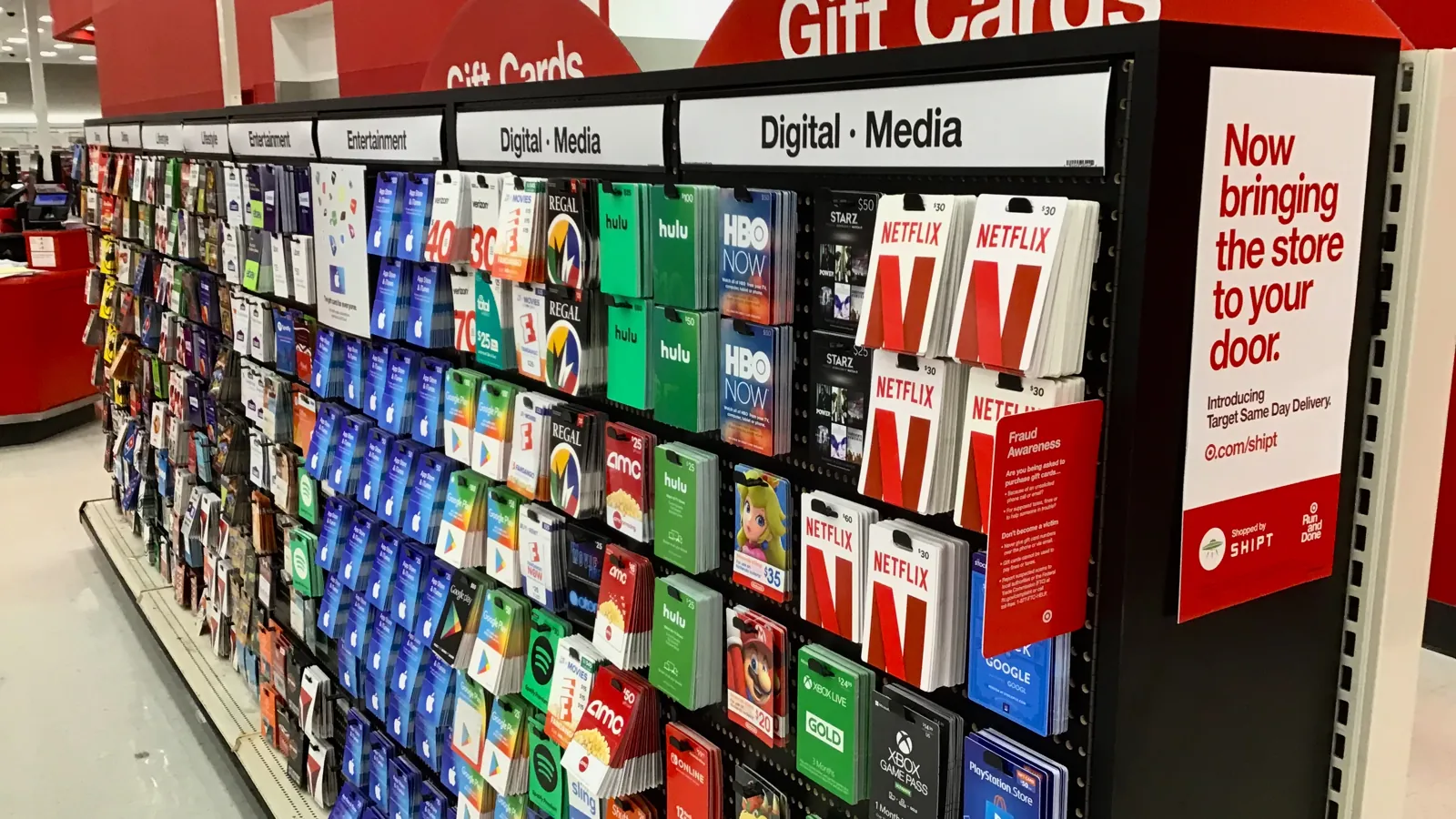
The same brand will often sell the same value in two forms. One is a plastic card in a paper sleeve. The other is an email with a code and a button. They draw on the same kind of account, and in most shops they spend in exactly the same way. The difference is in how the card travels and how it is kept.
What each one is
A physical gift card is bought from a shop rack, from the brand's own store, or ordered online and posted. It carries a number, usually a PIN under a scratch-off strip, and sometimes a barcode or magnetic stripe.
A digital gift card, often called an eGift card or e-voucher, has no plastic. After payment, the recipient gets an email or message containing the code, the value and a link to view the card. Many brands let you choose a design, add a message and schedule delivery for a particular day.
The differences that matter
Digital
Physical
Delivery
Minutes, sometimes a few hours for a first order
Immediate in a shop; days by post
Sending far away
Easy, and free
Postage, and a risk of loss in the mail
Giving in person
A message on a phone
Something to wrap and hand over
Keeping it
Lives in an inbox or app; searchable
Easy to mislay; can be photographed as a backup
Spending online
Copy and paste the code
Type the number and PIN from the card
Spending in a shop
Show the barcode on a phone, if the brand supports it
Hand the card to the cashier
Typical limits
Often a lower maximum per card
Often a higher maximum
Risk to watch
Sent to the wrong address; phishing emails that imitate gift cards
Tampering on the rack; loss
When digital is the better choice
- You are short of time. A digital card bought on the morning of a birthday still arrives on the day.
- The recipient lives far away. No postage, no customs form and no wait.
- The recipient shops online. The code is already where they will use it.
- You want it scheduled. Buy today, deliver on the date.
- You worry about loss. The email can be found again, and many brands let the card be added to an account or a phone wallet, which protects the balance even if the email is deleted.
When physical is the better choice
- You want to hand something over. A card in an envelope still feels like a present in a way an email does not.
- The recipient does not use email much. An older relative may prefer something to keep in a wallet.
- It is going with another gift. Tucked into a card or a parcel.
- You are paying in cash. A card from a shop rack can be bought without any online account.
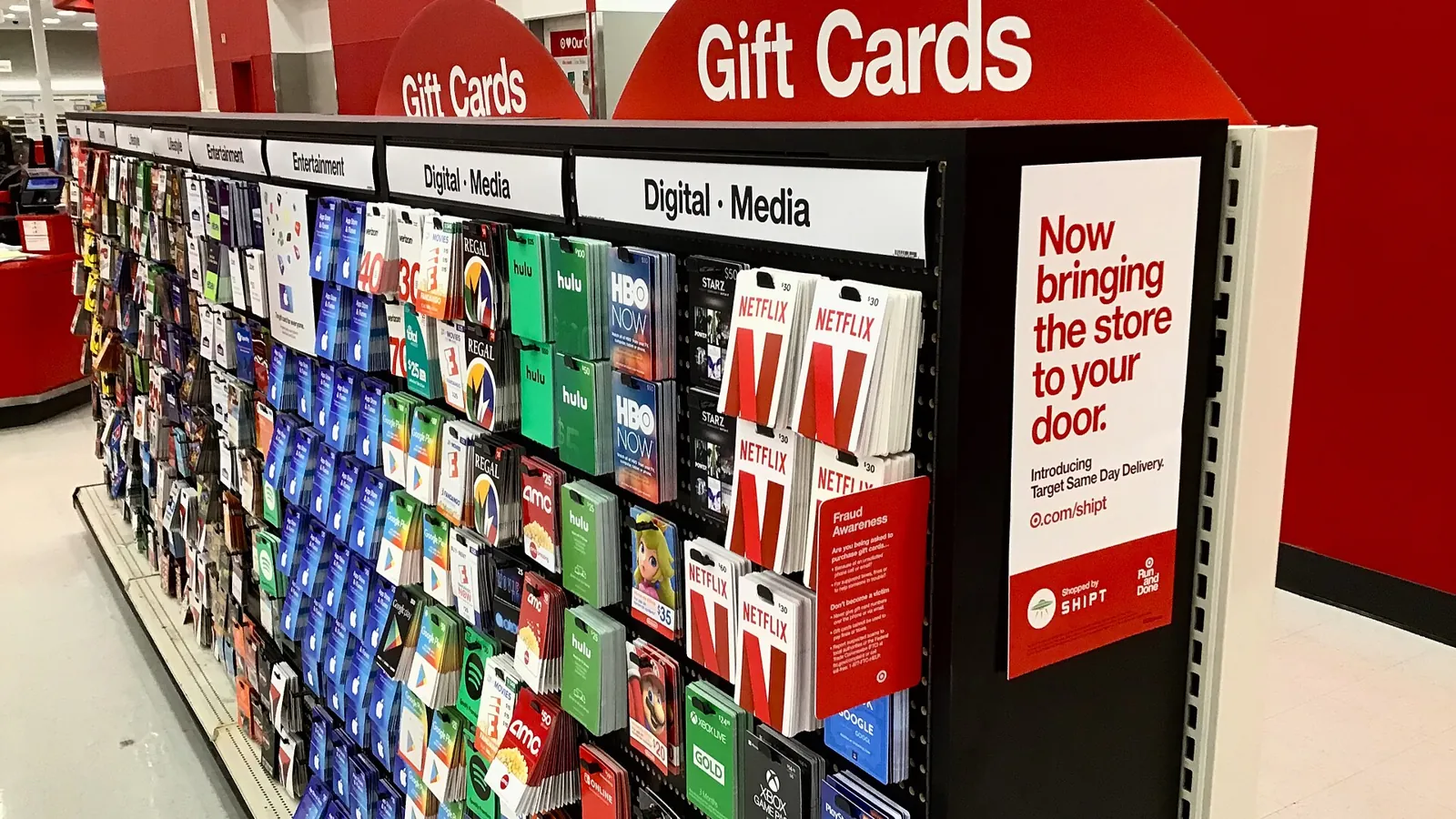
Physical cards are still the easiest to buy with cash and to give by hand. Photo: Mike Mozart, CC BY 2.0, via Wikimedia Commons.
Check where the card can be spent
Most large retailers accept both forms online and in store. There are exceptions, and they are worth a minute's check on the brand's gift card page before you buy.
- Some digital cards are online only, with no barcode for the till.
- Some cards are tied to a country. A card bought on a brand's US site generally works only on the US site and in US stores, and in dollars. This matters when sending a gift abroad: buy from the site of the country where the recipient lives.
- Some brands issue separate cards for separate parts of the business, such as a store card and an app or streaming card. They are not interchangeable.
Sending a digital card safely
- Confirm the address. Type the recipient's email carefully, or send it to yourself and forward it.
- Tell them it is coming. Fraudulent emails imitate gift card deliveries. A quick message saying "I've sent you a card from this shop" helps the recipient trust the real one.
- Keep the order confirmation. It shows the order number, and the brand's support team will ask for it if the card does not arrive.
- Suggest they add it to their account. Once a balance is attached to the recipient's own account with the brand, the code alone can no longer be used by someone else.
A good habit for both kinds. Take a photo of the front and back of a physical card, or keep the email of a digital one, until the balance reaches zero. If the card is lost, the number and proof of purchase give the issuer something to work with.
Turning one into the other
Many brands let a physical card be added to an online account or app by typing in its number, which in effect makes it digital. Going the other way, a digital card can be printed at home and put in an envelope, which solves the problem of wanting something to hand over at the last minute.
For where to buy either kind, see where to buy gift cards. For how individual brands handle the two forms, see the brand-by-brand guide.
Questions readers ask
Do digital gift cards expire sooner than physical ones?
Not usually. The same brand normally applies the same terms to both. The date, if there is one, is shown in the email or on the card.
The email never arrived. What should I do?
Ask the recipient to check spam and promotions folders, confirm the address you entered, then contact the brand with your order number. Most can resend the card or correct the address if it has not been used.
Can a digital card be regifted?
If it has not been added to an account or spent, forwarding the email passes it on. Once it is attached to an account it usually cannot be moved.
Is a screenshot of the code enough to spend it?
Often, yes, which is exactly why a code should not be shared or posted. Treat a screenshot as you would the card itself.