Millions of gift cards are bought and spent every day without incident. The problems that do occur fall into a few patterns, and each has a simple defence. None of them requires technical knowledge, only knowing in advance what a fraud looks like.
The demand for payment in gift cards
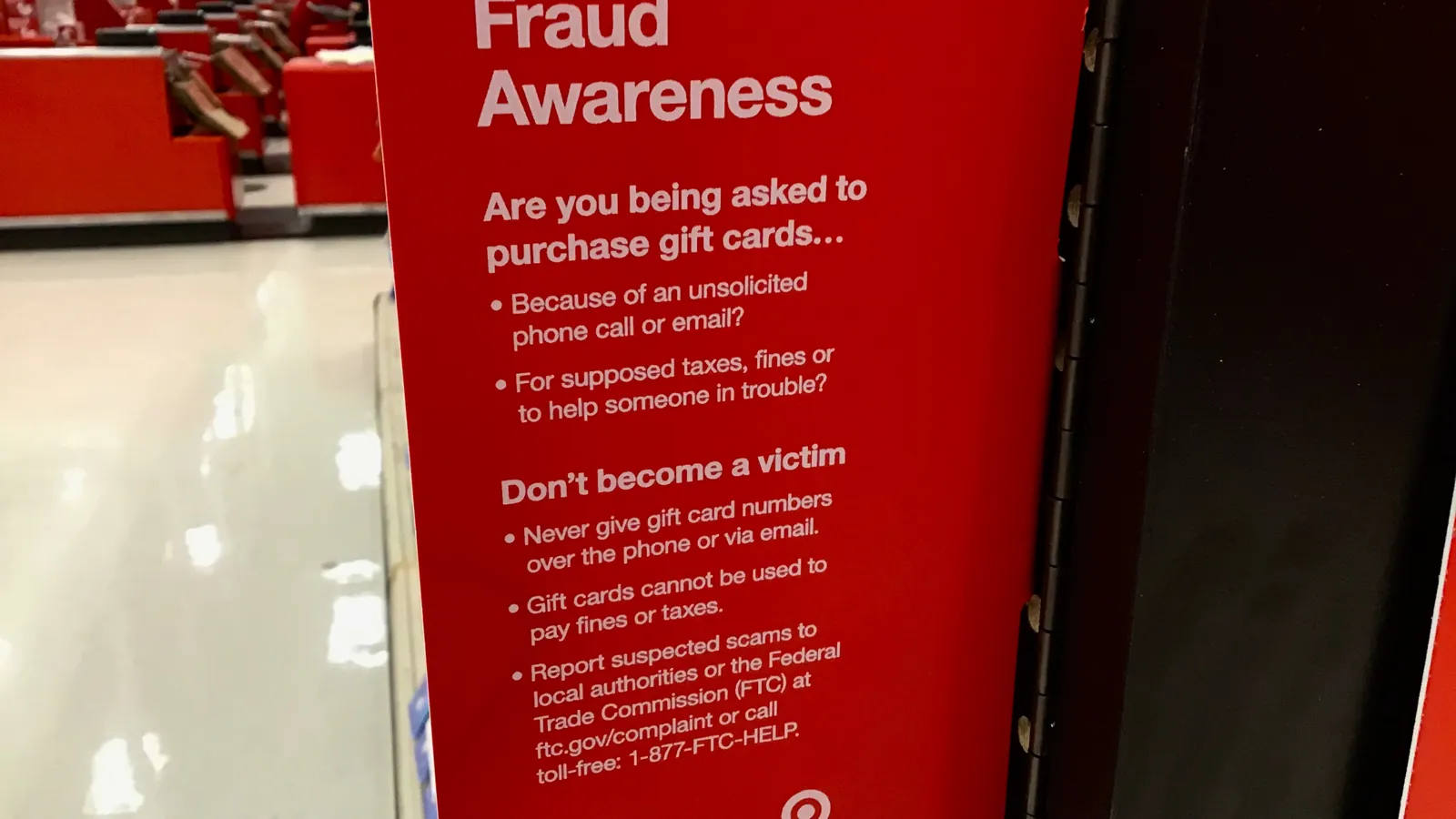
This is by far the most damaging gift card fraud. Someone contacts you by phone, text, email or social media, creates a sense of urgency and tells you to buy gift cards and send the numbers. The story varies:
- a tax office or police force saying you owe money or face arrest,
- a utility company about to cut off your power,
- technical support that has "found a virus",
- a boss or colleague asking for cards for a client, urgently and discreetly,
- a relative in trouble who needs help right now,
- a prize, grant or refund that needs a "fee" paid first,
- an online seller or landlord who wants a deposit in cards.
The request is the fraud. Consumer organisations such as the Better Business Bureau document these approaches in their guidance on fake surveys and prize scams, and the advice never changes: a real organisation does not take payment in gift cards.
If someone tells you to buy a gift card and read them the number, stop. Hang up or close the message. Contact the organisation they claim to be from using a number you find yourself.
Tampered cards on the rack
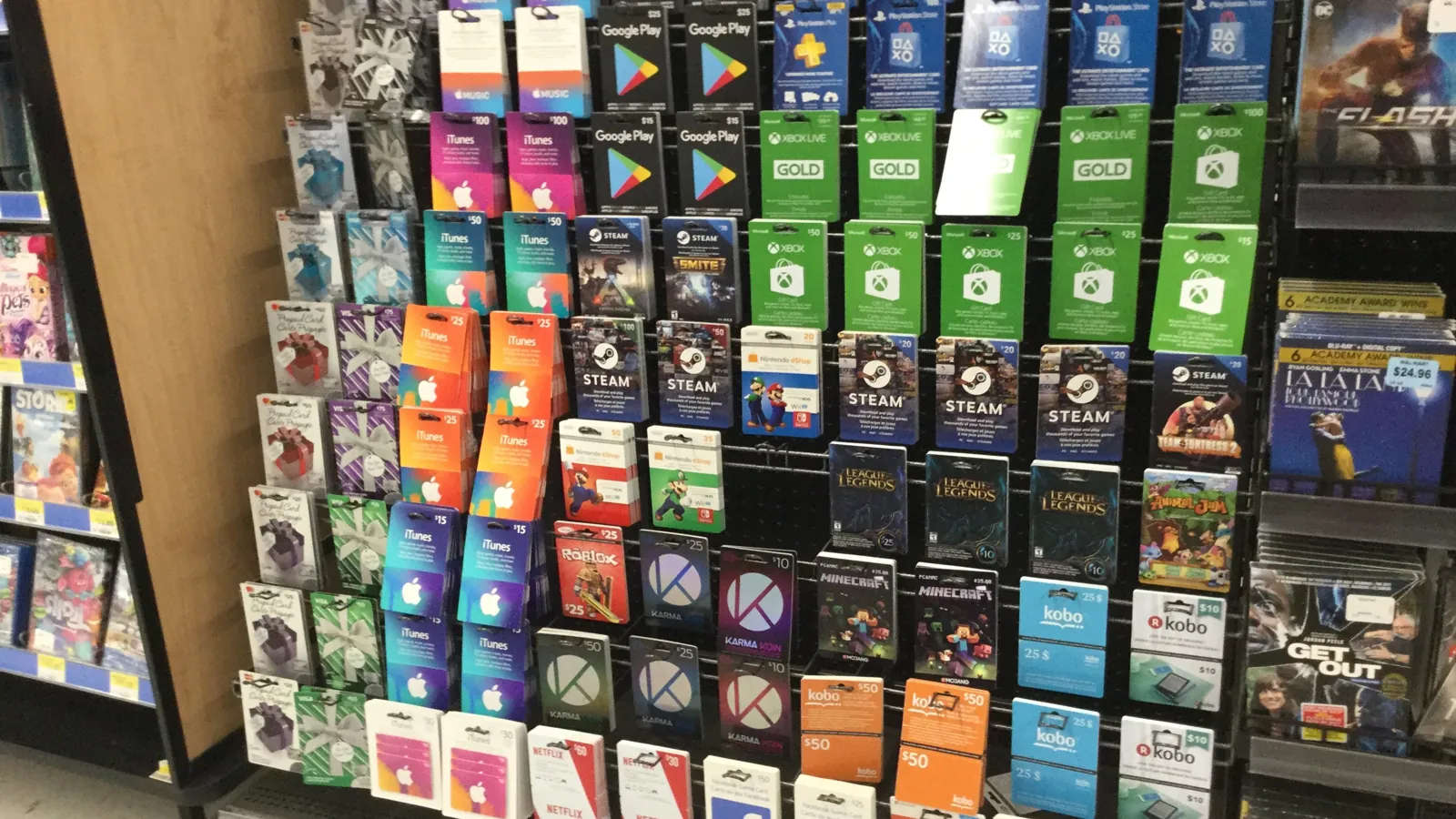
Thieves sometimes remove cards from a shop, record the numbers, reseal the packaging and return the cards to the rack. When an unsuspecting customer activates one, the thief spends the balance.
Before paying for a physical card:
- Look at the packaging. It should be sealed, with no tears, wrinkles or signs of re-gluing.
- Look at the PIN strip. The scratch-off coating should be whole. A sticker placed over the area is a bad sign.
- Compare it with its neighbours. A card that looks different from the others on the hook should be handed to staff.
- Take one from the middle or back of the hook, or buy cards kept behind the counter.
- Keep the receipt until the balance has been spent.
Digital cards bought from the brand avoid this problem entirely.
Fake balance-checking sites
Search for "check gift card balance" and some of the results are sites built to collect card numbers and PINs. Enter your details and the balance is spent within minutes.
Check a balance only through:
- the web address printed on the card or in the original email,
- the brand's own app,
- the phone number on the back of the card,
- a till in the brand's own shop.
Discounted cards from strangers
Cards sold far below face value through social media, classified ads or unfamiliar sites are often stolen, bought with stolen payment details or already empty. Even a card that shows the right balance at the moment of sale can be drained afterwards, because the seller still knows the number. For the legitimate places to save a little, see where to buy gift cards.
Phishing that looks like a gift
Messages announcing "You have received a gift card" with a link are a common way to steal passwords. A real digital gift card names the sender, comes from the brand's own domain and does not ask you to sign in to an unrelated service or pay anything to claim it. If in doubt, ask the supposed sender whether they sent it.
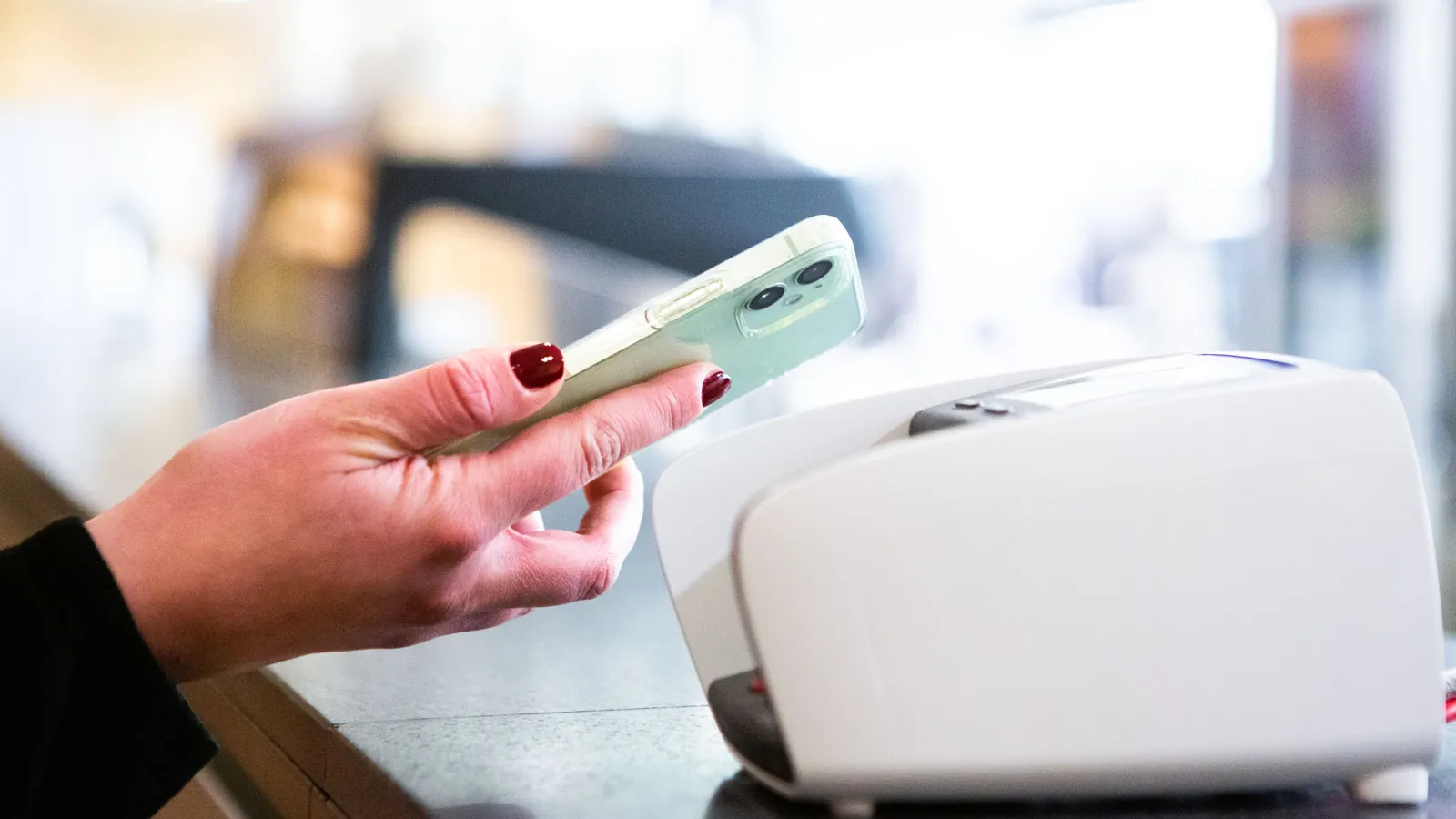
Adding a card's balance to your own account or phone wallet protects it if the card or email is lost. Photo: European Commission, CC BY 4.0, via Wikimedia Commons.
Looking after a card you own
- Add it to your account. Many brands let you load a card's balance into your account or app. Once there, the code alone is no longer enough to spend it.
- Register prepaid network cards. Registering a Visa or Mastercard gift card with your name and postcode makes it usable online and helps if it is lost.
- Photograph the card front and back, or keep the email.
- Spend it reasonably soon. A card in use is a card you will notice a problem with.
- Do not share codes in photos or messages, except with the person you are giving the card to.
If a card turns out to be empty
- Gather the proof: the card, the activation receipt or order email, and the date and place of purchase.
- Contact the issuer first, using the number on the card. Ask them to check the transaction history and freeze any remaining balance.
- Go back to the seller with the receipt. Shops can confirm whether activation went through and often replace a card that was never properly loaded.
- Ask for the case in writing and note the reference number.
If you have given a code to a fraudster
Speed matters, because fraudsters spend the balance quickly.
- Call the card's issuer at once, say the card was used in a fraud and ask for the funds to be frozen. Some issuers can refund money that has not yet been spent.
- Keep the card and the receipt.
- Tell the shop where you bought it.
- Report it to your country's fraud reporting service and, if you paid by card, to your bank.
- Do not pay anyone who offers to recover the money for a fee. That is a second fraud aimed at the same people.
There is no shame in being caught. These approaches are scripted by professionals, and they work on careful people every day.
Safety with money apps
Sending money through Cash App, Venmo, PayPal, Apple Cash or a bank app has its own rules: confirm the recipient, and never pay to "release" a payment. They are covered in sending money as a gift.
A short checklist
- Buy from the brand or a well-known shop.
- Inspect physical cards and keep the receipt.
- Check balances only through the address on the card.
- Never use a gift card to pay a bill, a fee, a fine or a stranger.
- Add the balance to your account when the brand allows it.
Questions readers ask
Can a stolen gift card balance be refunded?
Sometimes, if the issuer is told before the money is spent or can see the card was compromised before sale. It is not guaranteed, which is why the receipt matters.
Are digital gift cards safer than physical ones?
They avoid rack tampering. They bring a different risk, phishing emails, which is avoided by checking with the sender.
A caller knew my name and address. Does that make them genuine?
No. Personal details are easy to obtain. The request for gift cards is the proof that the call is a fraud.
Is it safe to buy a gift card with a credit card?
Yes, and it gives you a record of the purchase. It does not protect you if you later give the code away.